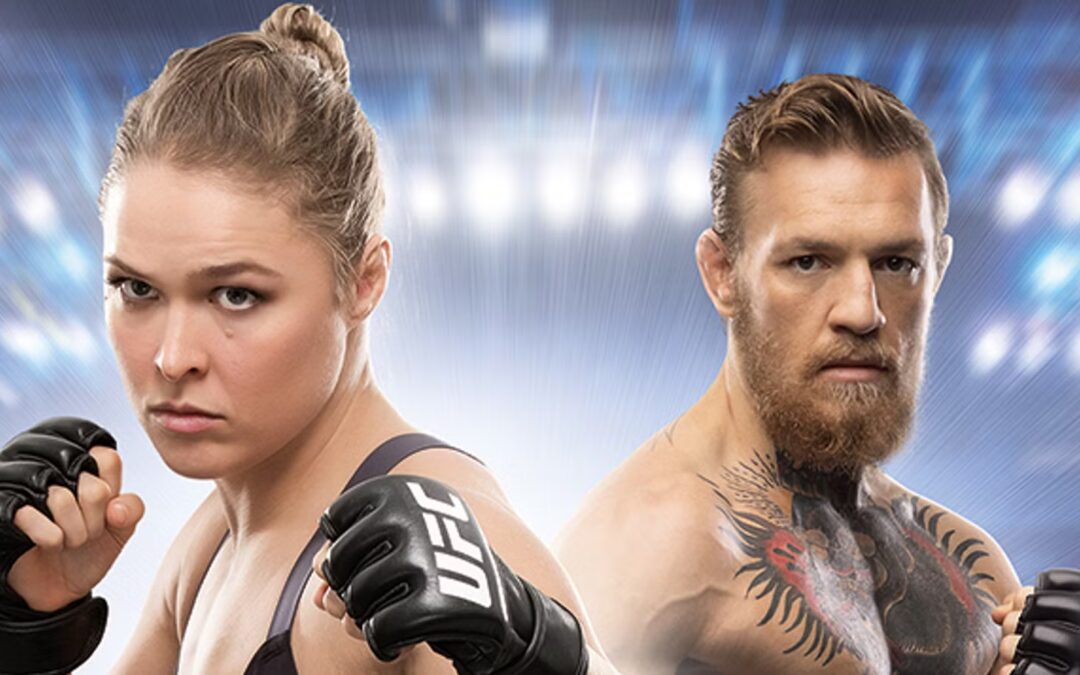
Real MMA fans see the Ultimate Fighting Championship as the purest fighting in the world, but for years, its video game counterparts were just ploys to cash in on one of the hottest licenses in sports today.
While the original UFC game from EA Sports and THQ’s editions of the series weren’t terrible, they never captured the pugilistic poetry and enigmatic episodes of ground and pound and grappling the way that “UFC 2” does.
Although it’s an MMA game for everyone, “UFC 2” is simple enough to pick up, it’s ultimately an experience true lovers of the sport will appreciate for its depth and attention to detail. While its realism may, at times, make the game a challenge, it mirrors the spectacle, strategy and sexiness of a mixed martial arts bout wonderfully.
Graphically, “UFC 2” is beautiful, with awesome facial and cloth animations that bring each fight to life like never before. Solid commentary from Mike Goldberg and Joe Rogan add the TV element the same way the NHL and FIFA games do. Simply put, from the aesthetics (thank you, yummy card girls in-between rounds, roar), a diverse soundtrack and TV realism, “UFC 2” does everything right before the fight starts.
Once you tap gloves and the war in the octagon begins, you’ll quickly realize this is a different game from the first. While there are still too many punches and kicks thrown in each battle, the number has shrunk tremendously from last year, much closer to the UFC average over the past few years. And unlike EA Sports’ last attempt at the UFC, the strikes “feel” right. From in the clinch, to on the ground, you’ll scream in delight or wince in terror when the blows come down.
This is not the game to play while your wife is sound asleep on a Saturday morning. This is not a game to play while holding in the urge to hit the restroom. Much like a real fight, this is a game you’ve got to be prepared to play. This is an experience you’ve got to mentally train for. If you go into it expecting to win the same way you do in “Tekken” or “Street Fighter,” you’re going to make yourself miserable fast. If you learn the techniques you need succeed though, it’s a thrilling and rewarding time that never gets old.
However, where “UFC 2” distinguishes itself the most is the submission game and on the ground. The easiest way to describe the jujitsu elements of the game is playing and transitioning through chords on the guitar. At first, it’s difficult and even boring, but after time, it becomes so fluid and fun that you’ll want to take your opponent to the ground and choke him out with a Japanese Neck Tie. Casual gamers have no fear, though, there is a Knockout Mode where all you do is through fists and feet as well.
While the mechanics of each fight are smart and will keep you on the couch for hours, the Ultimate Team is where a bulk of your time will be submitted. Creating your own stable of fighters from scratch and taking them through the ranks of the UFC is a blast, but is a serious investment of time and difficult to boot. At the same time, with daily rewards and a ton of ways to improve your fighters, it’s just as fun as any of the other Ultimate Team modes in EA’s other games and more importantly, never feels forced.
Overall, with a hearty list of fighters, improved fight mechanics and the awesome Ultimate Team mode, “UFC 2” scores a tremendous first round knockout. In just two years, EA Sports has morphed the series from one that reveled in mediocrity, to the best MMA game ever released.
Pros:
Better Striking: In the original game, the punches and kicks would connect, but you wouldn’t “feel” it. This year, the Knockout Physics System has changed the hand-to-hand elements of the game dramatically, creating a tension-filled gameplay system where anything can happen.
More Intuitive Ground Work: “UFC 2” is a free-flowing experience and it’s evident from the ground game, changing positions fluidly and going from the guard to striking is a complete blast. The Next Level Submissions make it easier to pull off grapples from the clinch and perform nifty transitions. If you go through the tutorials and learn the proper way to play, you’ll feel like a pro after only a few bouts.
Awesome Visuals: From the lighting effects, real-time damage and awesome atmosphere, “UFC 2” does an excellent job of capturing the big-fight feel.
Cons:
CM Punk: He’s never fought in an MMA contest…why is he in this game? Bruce Lee and Mike Tyson are combat legends, influential to millions in the MMA world, while Punk is a professional wrestler. Does he belong in this game?
Final Thoughts:
With enhanced visuals and improved gameplay over the original, EA Sports’ “UFC 2” is the mixed-martial arts game you’ve been waiting for.


