
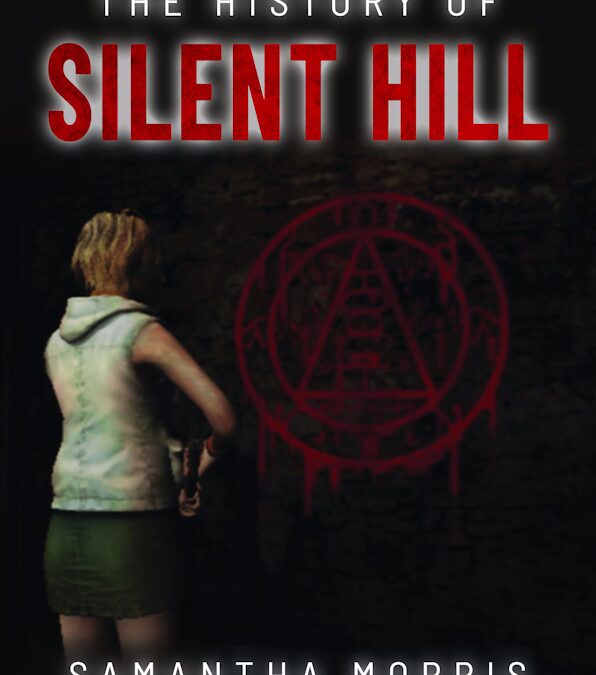
Earlier this year, Pen & Sword Books released The History of the Pokémon Games, which I reviewed here. At the same time, they released the much less obviously marketable The History of Silent Hill by Samantha Morris. Similar titles notwithstanding, these are very different books. While the Pokémon volume functions primarily as a sort of encyclopedia, Morris is comparably restrictive about what she considers to be a “true” Silent Hill game, limiting her analysis to the four numbered entries, Homecoming, and Downpour.
Morris doesn’t spend a lot of time explaining why she doesn’t consider Origins to be a central title when everyone else does. Ironically, based on her descriptions of the other six games, it seems that the main problem with origins is that it’s too concerned with the lore. Despite all the Silent Hill games being connected to, well, the creepy, foggy community of Silent Hill, only the first and third games in the series have a meaningful story connection. And even that’s technically a plot twist. Silent Hill is more a vibe than a place, a sort of haunting that works its way inside-out from the terrors of your own mind, presenting a nightmare world that doesn’t even look the same to anyone else.
This sort of thematic ground is pretty common for any fans of the series. The Boss Fight book exclusively about Silent Hill 2 makes a similar sort of argument, just in more detail and focused entirely on Silent Hill 2’s own narrative. Like that text, The History of Silent Hill is stuck in an awkward place in that dissecting the themes pretty much requires spoiling the whole story, and the author can do little except beg the reader to play the game if they haven’t already. The History of Silent Hill does have happier new than the Boss Fight book did in regard to playing Silent Hill 2 on modern hardware, though, in that Morris is adamant that the 2024 remake is an exceptional conversion made by people who clearly understood what the original game was trying to do. Not to be confused at all with the 2012 remake, which ruins it by among other things, not managing the fog properly.
For the other five games, Morris recounts not just the thematic horror of the stories but also how they tend to play out in practice from a gameplay perspective. Her bestiaries of the monsters in these games describe how they act, how they can be killed, and what this says about the subconscious nightmares of the main character that imply or spawn such creatures. This isn’t exactly a player’s guide, mind you. Morris develops her interpretations of these games by stripping them down to all their individual elements, development, plot, characters, monsters, endings, and uses her generally accurate descriptions of them to create a greater thesis about what these games are actually about.
It’s a good analytical technique if only because it can help job the reader’s memory about how these games looked and felt when it may well have been ten or twenty years since they actually played them. Of course, the fickle nature of memory itself is a pretty predominant theme in these games, with the warped worlds the players encounter all being a direct case of distortions in these mental records. Laid out end to end like this, it’s easy to see how all six games are connected in more profound ways than just the lore. Morris even lays out a fairly convincing argument as to how Silent Hill 4 is unfairly maligned, as both gameplay and storywise, all of its strange departures from the formula are perfectly within the larger ethos of Silent Hill.


You must be logged in to post a comment.