
LEGIONNAIRES – A Brutal 8-Bit NES Game is being developed by German father-and-son team German Garage Games. The Kickstarter reached its €5,000 funding goal in just two hours, and the campaign is now moving towards its next stretch goal.
Inspired by Contra, Metal Gear and Predator, Legionnaires combines run-and-gun action with environmental puzzles and two protagonists whose actions affect each other’s journey.
The project features exclusive box art by comic artist Romano Molenaar, known for his work with Marvel and DC, and is being developed for original NES hardware. The team also won the NESmaker Emissary Award at the 2026 Midwest Gaming Classic.
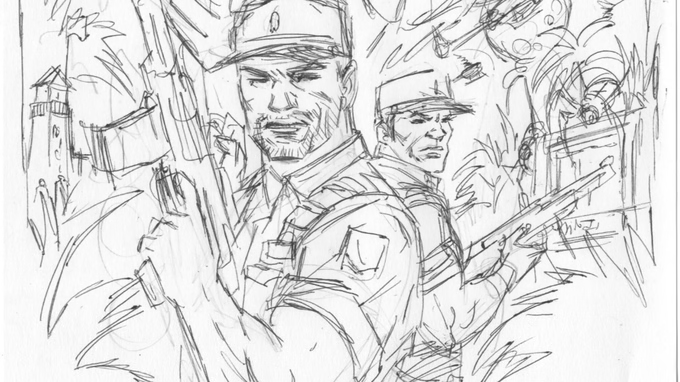
Two soldiers jump.
The mission quickly turns into something far darker.
The deeper you explore…
the more reality begins to fracture.
The island is alive.
Something is watching.
It has been waiting and it doesn’t want you to leave.

From Christmas Lights to Fractured Nightmares. We are a father-and-son team from Germany making games for the original Nintendo Entertainment System. When we released our first game, Christmas Crisis, my son was only 14. Now, at 16, he has grown as a developer and wanted to create something darker, more ambitious and more mature. Legionnaires is the result of that desire — our first step into a grittier, more personal direction. Together we combine:
- Military-inspired storytelling and atmosphere (inspired by films like Predator)
- Classic 80s run-and-gun action and military action (Contra, Metal Gear)
- Modern puzzle design on real NES hardware
FEATURES
- ⚔️ Authentic NES-style experience
- 💀 Brutal difficulty – no hand-holding
- 🌑 Dark, oppressive atmosphere
- 🧠 Puzzle mechanics integrated into gameplay


You must be logged in to post a comment.